

What is Dark Empath and How to Deal With It?
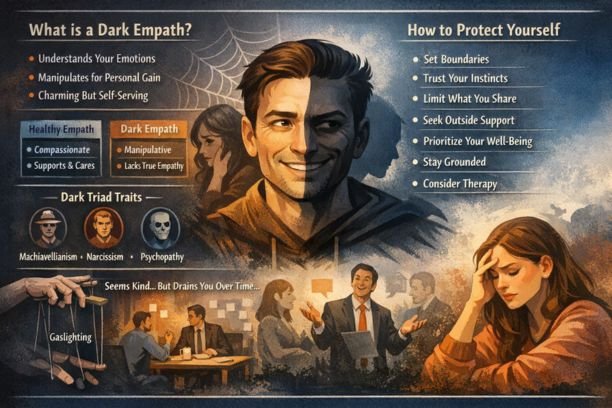
In recent years, the term “dark empath” has gained attention in psychology discussions, relationship advice, and self-growth content. Many people come across this concept after experiencing a relationship—personal or professional—that felt emotionally confusing, draining, or subtly manipulative. You may have felt understood on a deep level, yet somehow used, controlled, or diminished over time.
Understanding what a dark empath is, how they differ from other personality types, and how to protect yourself is essential for emotional well-being. This article explains the concept from a reader’s perspective, using clear language, practical examples, and actionable strategies so you can recognize unhealthy dynamics and respond with confidence.
What Is a Dark Empath?
A dark empath is a person who possesses a high level of cognitive empathy—the ability to understand what others are thinking and feeling—but uses this skill for personal gain rather than genuine care.
Unlike healthy empaths, who feel compassion and are motivated to help others, dark empaths understand emotions without emotionally sharing them. They may appear kind, supportive, and emotionally intelligent on the surface, but their underlying motivation is often self-serving.
In simple terms:
- They know how you feel
- They know how to respond
- But they use that knowledge to manipulate, influence, or control situations
Researchers introduced the concept while studying whether people with dark personality traits—traditionally associated with low empathy—could still understand emotions well. The findings showed that some individuals combine emotional awareness with manipulative tendencies. This combination is what defines a dark empath.
Why Dark Empaths Are Hard to Identify
Dark empaths are difficult to recognize because they do not fit the stereotype of an openly cruel or cold individual. Instead, they often seem:
- Charming and socially skilled
- Emotionally aware
- Supportive during vulnerable moments
- Easy to connect with
This makes their behavior confusing. You may feel emotionally close to them, yet consistently feel drained, guilty, or uncertain after interactions.
Dark Empath vs. Healthy Empath
To understand dark empathy better, it helps to compare it with healthy empathy.
Healthy Empath
- Feels compassion and concern
- Wants to support and uplift others
- Respects boundaries
- Experiences emotional resonance
Dark Empath
- Understands emotions intellectually
- Uses emotional insight strategically
- Pushes boundaries subtly
- Lacks genuine concern for others’ well-being
The key difference lies not in emotional intelligence, but in emotional intention.
Dark Empath vs. Narcissist
Dark empaths and narcissists share some similarities, but they are not the same.
Similarities
- Manipulative behavior
- Sense of superiority
- Desire for control or admiration
Key Differences
- Empathy: Dark empaths have cognitive empathy; narcissists generally lack emotional empathy.
- Self-awareness: Dark empaths may recognize their harmful behavior but continue anyway. Narcissists often lack insight into how they affect others.
- Manipulation style:
- Dark empaths mirror your emotions to gain trust
- Narcissists rely on grandiosity, praise-seeking, and dominance
- Dark empaths mirror your emotions to gain trust
Dark empaths often blend in better socially because they understand emotional cues more accurately.
Dark Empath vs. Psychopath or Sociopath
Dark empathy is also sometimes confused with psychopathy or sociopathy, but there are important distinctions.
- Psychopaths typically lack empathy altogether and act impulsively.
- Sociopaths show little remorse and disregard social norms.
- Dark empaths, however, can read emotions well and may even appear emotionally sensitive—yet still act manipulatively.
Unlike psychopaths, dark empaths are often socially skilled and emotionally perceptive, making them harder to detect.
Understanding the Dark Triad
The concept of dark empathy is closely linked to the Dark Triad, a psychological framework that includes:
- Machiavellianism – Manipulation and exploitation for power
- Subclinical Narcissism – Grandiosity and need for admiration
- Subclinical Psychopathy – Lack of guilt and emotional coldness
Dark empaths are unique because they show dark triad traits combined with cognitive empathy. This means they can exploit others more skillfully because they understand emotional responses so well.
Common Traits of a Dark Empath
Dark empaths may not display all of these traits, but many show several consistently.
1. Cognitive Empathy
They can accurately read your emotions, thoughts, and vulnerabilities.
2. Manipulative Tendencies
They use emotional insight to steer conversations, decisions, or relationships in their favor.
3. Charm and Social Ease
They often appear confident, witty, and likable in group settings.
4. Narcissistic Traits
A sense of entitlement, superiority, or desire for control may be present.
5. Gaslighting
They may deny your experiences or subtly make you doubt your perception of reality.
6. Dark Humor or Sarcasm
Their humor can be cutting, dismissive, or cruel, often disguised as “just joking.”
7. Love Bombing
Excessive attention, gifts, or emotional closeness early on to build dependency.
8. Lack of Genuine Sympathy
They understand pain but do not feel compelled to ease it unless it benefits them.
An Incident Related to Dark Empathy
Emma worked closely with a colleague named Alex, who always seemed emotionally supportive. Alex listened attentively when Emma discussed work stress and personal struggles. Over time, Emma began sharing more private concerns, trusting Alex’s empathy.
However, Emma noticed patterns:
- Alex used her vulnerabilities during disagreements
- Took credit for her ideas while framing it as “team effort”
- Made Emma feel guilty for setting boundaries
Emma felt emotionally drained and constantly questioned herself, despite Alex appearing “kind.” Later, through reflection and feedback from trusted friends, Emma realized Alex understood her emotions well—but used that insight to manipulate workplace dynamics for personal advancement.
This example highlights how dark empathy can appear supportive while quietly undermining confidence and autonomy.
What Causes Dark Empathy?
There is no single cause, but several factors may contribute:
- Genetic predisposition: Personality traits are partly hereditary.
- Early environment: Childhood experiences involving control, neglect, or conditional affection.
- Learned survival strategies: Using emotional insight as a tool for influence.
- Cultural or social reinforcement: Rewarding manipulation over authenticity.
Personality is shaped by both nature and nurture, making dark empathy a complex behavioral pattern rather than a fixed diagnosis.
How to Deal With a Dark Empath
Interacting with a dark empath can be emotionally exhausting. The goal is not to change them, but to protect yourself.
1. Set Clear Boundaries
Define what behavior you will and won’t tolerate. Be firm and consistent.
2. Trust Your Intuition
If something feels off, it usually is. Pay attention to emotional discomfort, confusion, or anxiety after interactions.
3. Limit Emotional Disclosure
Avoid sharing personal vulnerabilities that can be used against you.
4. Seek Outside Perspective
Talk to trusted friends or mentors who are not emotionally involved with the situation.
5. Prioritize Yourself
Do not let guilt or obligation override your emotional safety.
6. Stay Grounded
Practices like mindful breathing, physical health, and time in nature help regulate stress and improve clarity.
7. Practice Self-Compassion
Being manipulated is not a personal failure. Use the experience as a learning opportunity.
8. Consider Professional Support
Therapy or relationship coaching can help rebuild confidence, recognize patterns, and strengthen boundaries.
Why Awareness Matters
Dark empaths thrive in environments where emotional awareness is mistaken for emotional care. By increasing your self-awareness, you reduce the power of manipulation and strengthen your ability to form authentic relationships.
Recognizing dark empathy does not mean becoming suspicious of everyone—it means learning to differentiate emotional intelligence used with integrity from emotional insight used for control.
Final Thoughts
A dark empath is not defined by cruelty, but by misused empathy. Their ability to understand emotions can feel comforting at first, yet over time may lead to confusion, self-doubt, and emotional exhaustion.
By understanding what a dark empath is, recognizing their traits, and learning how to respond, you empower yourself to protect your emotional health. Healthy relationships are built on mutual respect, compassion, and honesty—not manipulation disguised as understanding. Awareness is the first step toward emotional freedom.