

Daily Fitness Routine: Simple Habits to Stay Healthy and Active Every Day
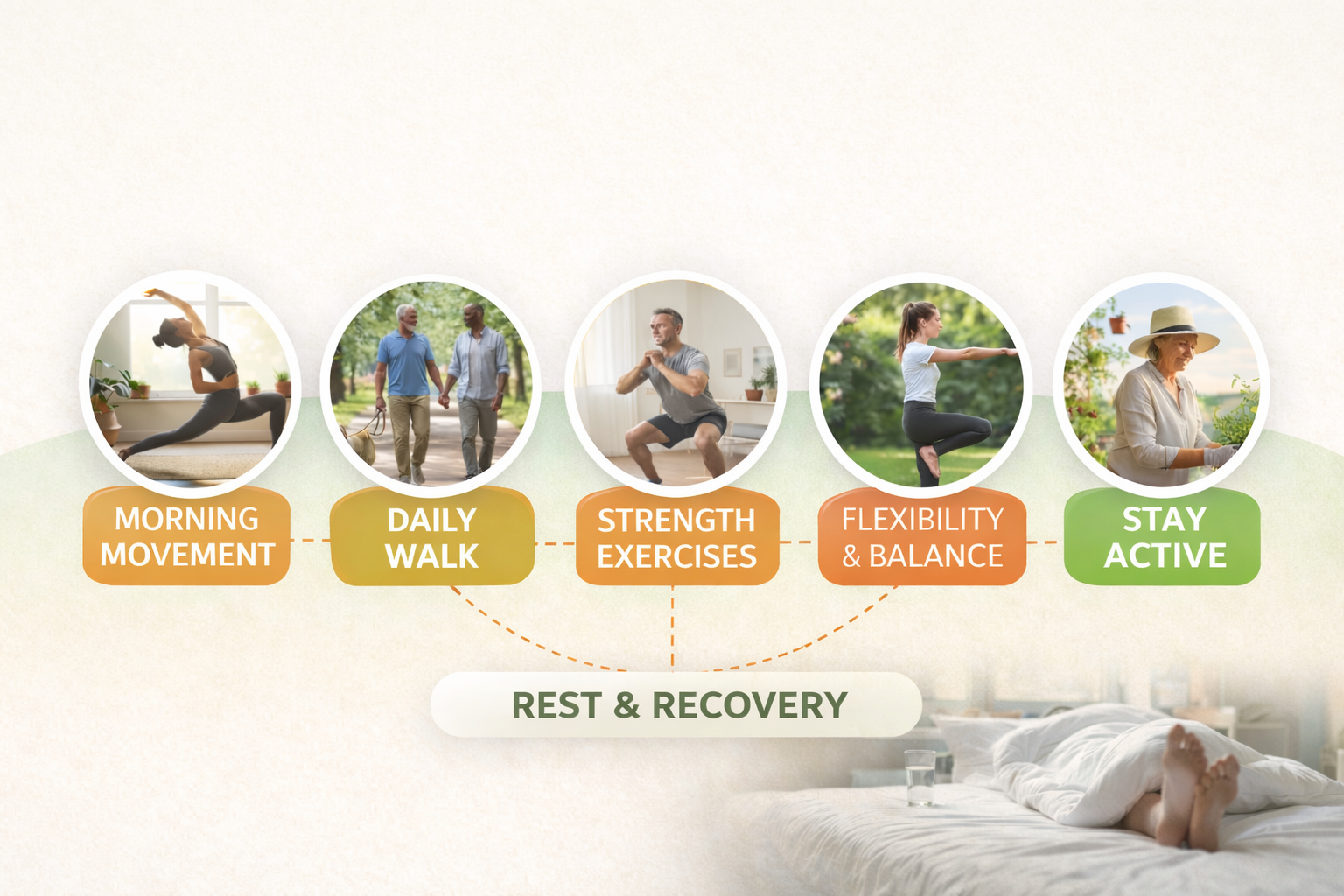
Maintaining a healthy lifestyle does not require extreme workouts or complicated fitness plans. In fact, the most effective way to improve your physical and mental well-being is by following a consistent daily fitness routine built around simple, sustainable habits. When fitness becomes part of your everyday life, staying active feels natural rather than forced.
This article explores easy and practical habits you can include in your daily fitness routine to stay healthy, energized, and active—regardless of your age or fitness level.
Why a Daily Fitness Routine Is Important
A daily fitness routine helps your body function at its best. Regular movement strengthens muscles, supports heart health, improves flexibility, and boosts mental clarity. Beyond physical benefits, daily exercise also plays a major role in reducing stress, improving mood, and promoting better sleep.
Health experts agree that even moderate physical activity done consistently can lower the risk of chronic conditions such as heart disease, diabetes, obesity, and joint problems. The key is consistency. Small efforts repeated daily lead to long-term results.
Start With Morning Movement
One of the best ways to build a daily fitness routine is to start your day with gentle movement. Morning exercise wakes up your muscles, increases blood circulation, and sets a positive tone for the rest of the day.
You don’t need a full workout session. Simple activities like stretching, light yoga, or a short walk can help reduce stiffness and improve mobility. Spending just 5 to 10 minutes moving in the morning can make a noticeable difference in how your body feels throughout the day.
Make Walking a Daily Habit
Walking is one of the easiest and most effective exercises for people of all fitness levels. It improves cardiovascular health, supports weight management, and strengthens the legs without placing excessive stress on the joints.
Incorporate walking into your daily routine by taking short walks after meals, parking farther away, or using stairs instead of elevators. Aiming for 20 to 30 minutes of walking each day can significantly improve overall fitness and energy levels.
Include Short Strength Exercises
Strength training is an essential part of a balanced daily fitness routine. It helps build muscle, improve bone density, and boost metabolism. The good news is that you don’t need gym equipment to get started.
Bodyweight exercises such as squats, lunges, push-ups, and planks are highly effective. You can complete a simple strength workout in as little as 10 to 15 minutes. Performing these exercises daily or every other day helps maintain muscle strength and supports long-term health.
Don’t Forget Flexibility and Balance
Flexibility and balance are often overlooked but are crucial for injury prevention and healthy movement. Stretching helps improve posture, reduce muscle tension, and increase range of motion.
Balance exercises are especially important as you age. Simple movements like standing on one leg, heel-to-toe walking, or gentle yoga poses can improve coordination and stability. Adding flexibility and balance exercises to your daily fitness routine supports mobility and reduces the risk of falls.
Stay Active Throughout the Day
A daily fitness routine isn’t limited to workout sessions. Staying active throughout the day is just as important. Long periods of sitting can negatively affect your health, even if you exercise regularly.
Try standing up, stretching, or walking for a few minutes every hour. Household chores, gardening, and active hobbies also contribute to daily movement. These small actions add up and keep your body engaged.
Build Consistency With Realistic Goals
The most successful daily fitness routines are realistic and flexible. Setting overly ambitious goals can lead to burnout or injury. Instead, focus on achievable habits that fit your lifestyle.
Schedule your fitness time, track your progress, and celebrate small victories. If you miss a day, don’t get discouraged. Consistency over time matters far more than perfection.
Listen to Your Body
Rest and recovery are essential components of a healthy daily fitness routine. Pay attention to how your body feels and adjust your activities when needed. Mild soreness is normal, but persistent pain or fatigue is a sign to slow down.
Getting enough sleep, staying hydrated, and fueling your body with nutritious foods also support physical activity and overall health.
Final Thoughts
A daily fitness routine does not need to be complicated or time-consuming. Simple habits like walking, stretching, short strength exercises, and staying active throughout the day can help you stay healthy and energized. The goal is to create a routine that feels sustainable and enjoyable.
By making fitness a daily habit, you invest in your long-term health, mobility, and well-being. Start small, stay consistent, and let your daily fitness routine grow naturally with you—one healthy day at a time.